12 Cozy Bedroom Ideas for a Small Room That Make Every Inch Count
A small bedroom does not have to feel cramped, cluttered, or unfinished. With the right layout, soft lighting, practical storage, and a few personal touches, even the smallest room can become a comfortable place to sleep, study, read, and relax.
The best bedroom ideas for a small room are not about squeezing in more furniture. They are about choosing pieces that serve a clear purpose, making use of overlooked spaces, and creating a room that feels warm without becoming visually crowded.
Below are 12 realistic small-bedroom ideas inspired by compact rooms that feel cozy, functional, and full of personality.
1. Place the Bed Beside the Desk to Create a Practical Layout
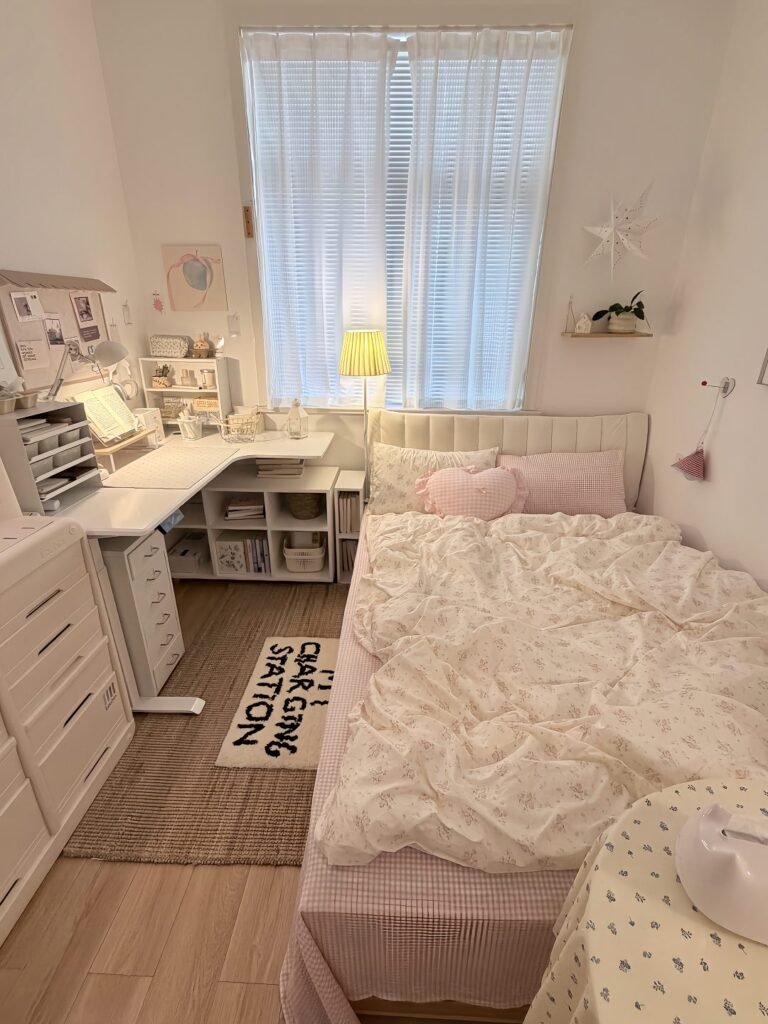
When a bedroom needs to function as both a sleeping space and a study area, placing the bed and desk side by side can make the layout feel more organized.
In this room, the bed occupies one side while an L-shaped desk fills the opposite corner. This arrangement leaves a narrow but usable walkway in the middle. The desk also extends beneath the window, allowing natural light to reach the workspace during the day.
A small shelving unit between the desk and bed provides extra storage without requiring another large piece of furniture.
To recreate this look:
- Choose a compact desk with drawers.
- Use open cubes for books and baskets.
- Keep furniture in a similar color palette.
- Place the desk near the window whenever possible.
The soft pink gingham bedding prevents the mostly white room from feeling too plain.
2. Make the Bedroom Feel Like a Tiny Studio Apartment
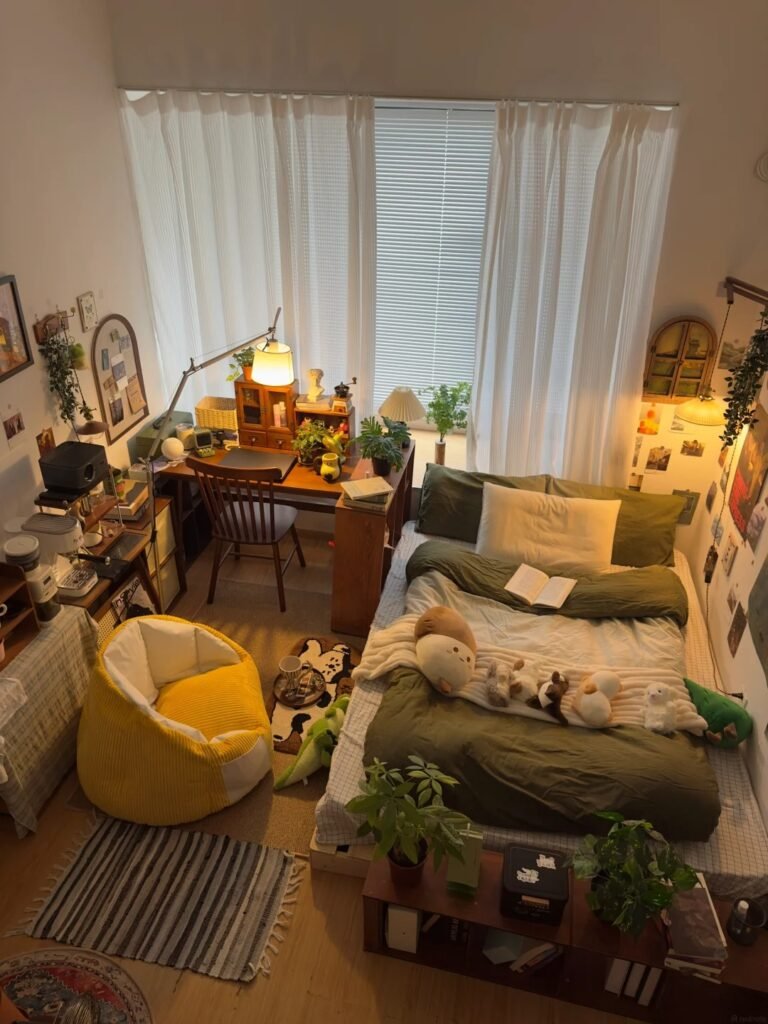
One of the most creative bedroom ideas for a small room is to treat the space like a miniature studio apartment.
This cozy room includes a bed, desk, coffee station, lounge chair, plants, shelving, and reading area. Although there are many items, the room still feels intentional because each activity has its own zone.
The dark wood furniture and olive-green bedding create a warm, grounded atmosphere. Multiple lamps add pools of soft light, making the room feel especially inviting in the evening.
The key is to avoid placing everything randomly. Group similar functions together:
- Keep work items around the desk.
- Create a drink station on one cabinet.
- Place books close to the bed.
- Use a small chair to define the relaxation area.
This approach works well for renters, students, or anyone spending a lot of time in one room.
3. Use One Long Desk Instead of Several Small Tables
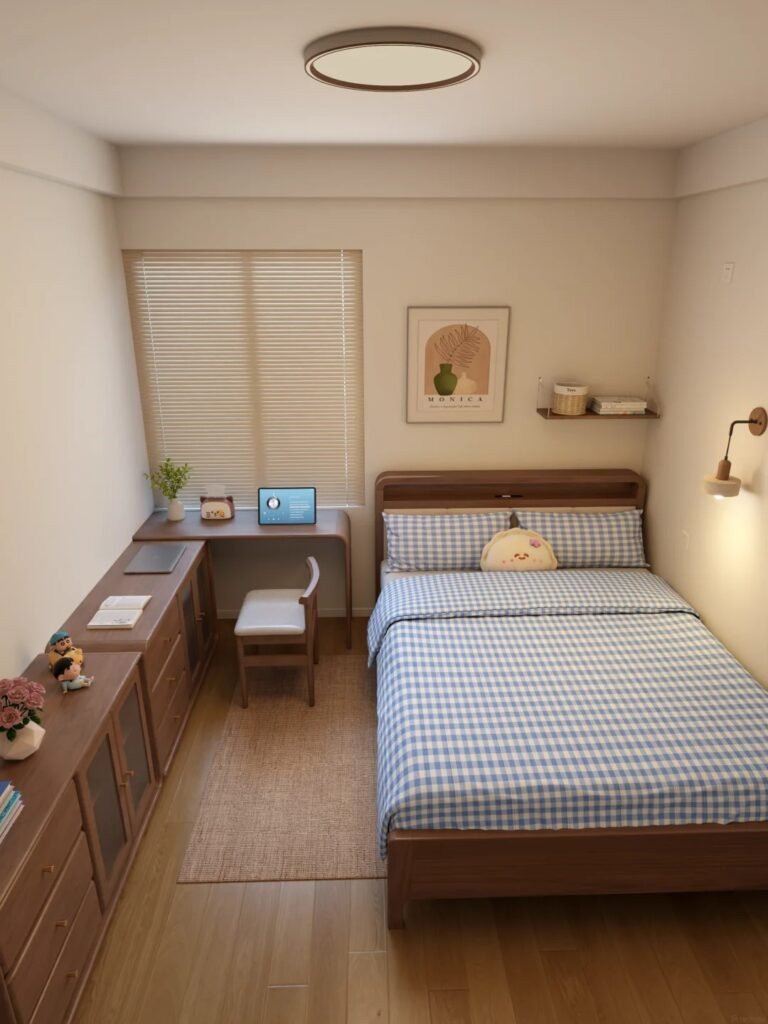
A continuous desk can be more efficient than several separate pieces of furniture.
In this compact bedroom, a long wooden surface runs along one wall and turns beneath the window. It acts as a desk, display surface, bedside table, and storage area all at once.
The bed sits neatly beside it, leaving the center of the room open. Matching wood tones make the layout feel calm and cohesive, while blue gingham bedding adds a cheerful but subtle pattern.
This design is especially useful in a narrow room because it keeps most of the furniture against the walls.
For a similar setup, choose a desk with:
- A shallow depth.
- Built-in drawers or cabinets.
- Rounded corners where possible.
- Enough space for both studying and bedside essentials.
Keeping the walls mostly undecorated also helps this type of room feel wider.
4. Add a Small Sofa to Create a Separate Sitting Zone
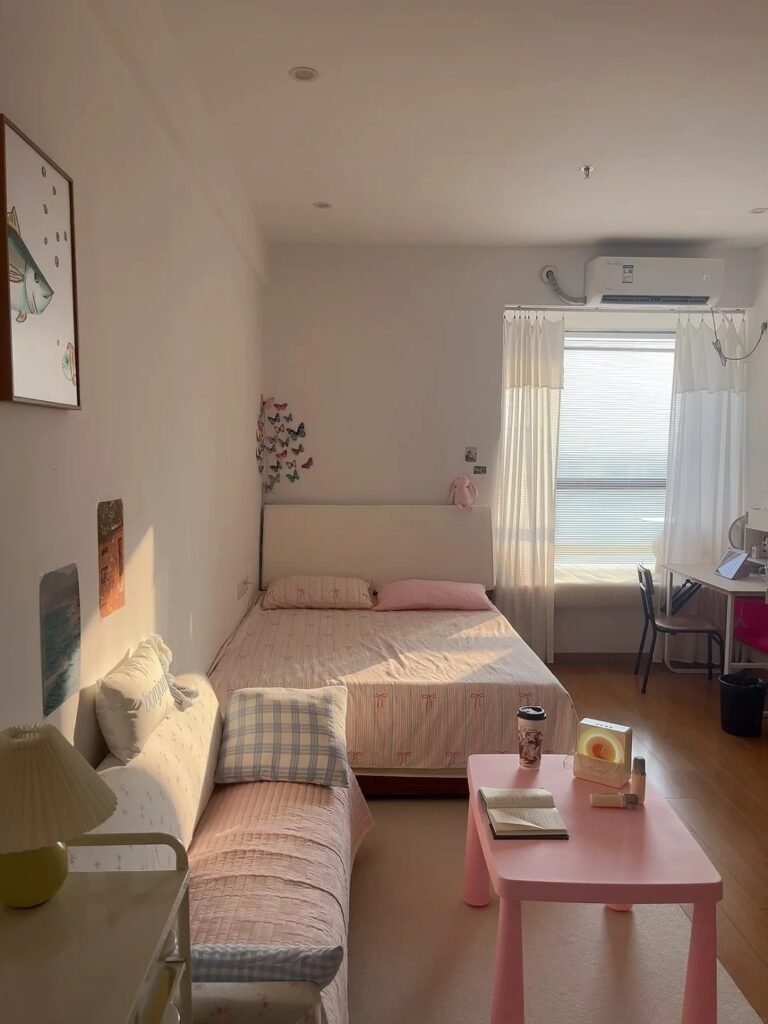
A small bedroom can still include a place to sit that is not the bed.
This room uses a compact sofa along one wall, a double bed at the back, and a pink coffee table in the center. The arrangement creates a casual living area without making the room feel overly formal.
The repeated pink tones connect the sofa cover, bedding, pillows, and table. Because the colors are light and soft, the room remains airy despite having several large pieces of furniture.
A layout like this works best in a slightly longer bedroom. Choose a sofa with a narrow frame, or consider:
- A loveseat.
- A floor sofa.
- A convertible chair.
- A bench with a padded seat.
A small table can also double as a place for reading, eating, journaling, or working from the sofa.
5. Replace a Nightstand With a Low Storage Shelf
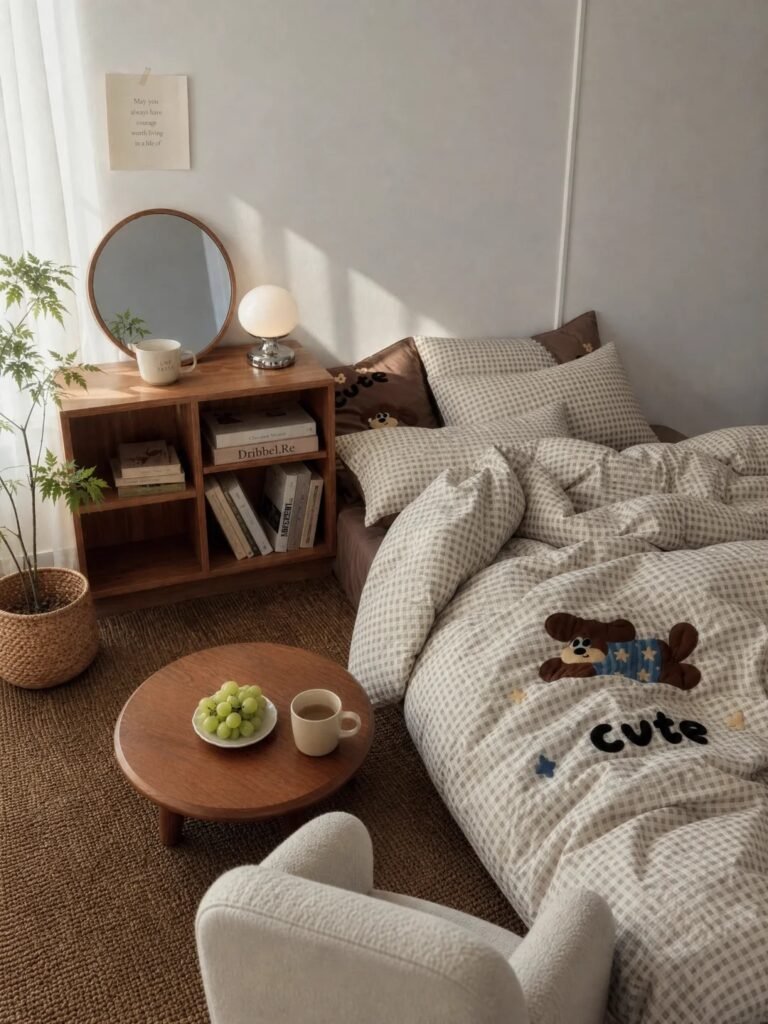
Traditional nightstands are not always the best choice for small bedrooms. A low cube shelf can provide much more useful storage while occupying a similar amount of space.
In this room, the wooden shelf beside the bed stores books while also supporting a mirror, lamp, and cup. The open design keeps everything easy to reach and prevents the corner from feeling heavy.
Natural materials play an important role here. The wooden furniture, woven plant basket, textured rug, and checked bedding create warmth without relying on strong colors.
This is one of the easiest bedroom ideas for a small room to copy on a limited budget. A basic cube shelf can become:
- A bedside table.
- A mini bookcase.
- A display shelf.
- A plant stand.
- A storage unit for baskets.
Keeping the shelf low also allows sunlight to pass through the room more freely.
6. Create a Cozy Cocoon With Layered Lighting
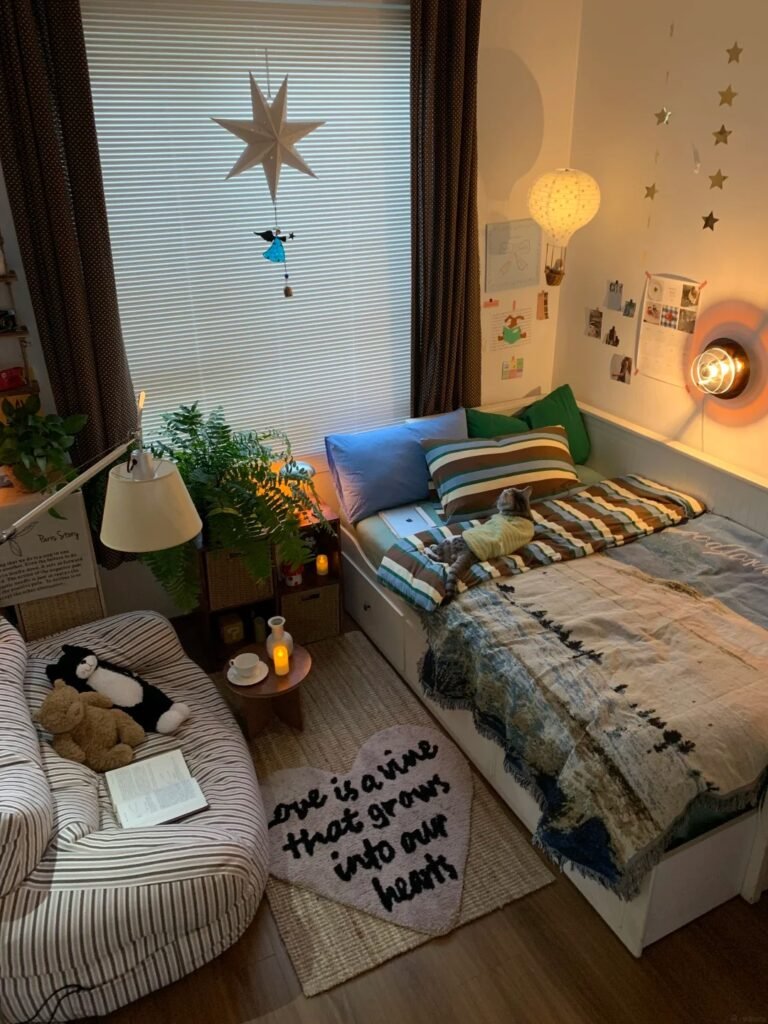
Small rooms can feel more comfortable when they include several gentle light sources instead of one bright ceiling light.
This bedroom combines a wall lamp, small table lamp, decorative hanging light, and warm accent lights. Together, they create a soft glow around the bed and seating area.
The striped bedding, green pillows, oversized floor chair, plants, and playful wall decorations make the room feel personal and relaxed. Even though the space is compact, it has enough visual interest to feel like a private retreat.
Try combining:
- One practical reading lamp.
- One warm bedside lamp.
- A decorative wall or hanging light.
- Small battery-powered accent lights.
Use warm bulbs rather than cool white ones to make the bedroom feel calmer at night.
7. Keep the Main Furniture Simple and Add Personality Through Accessories
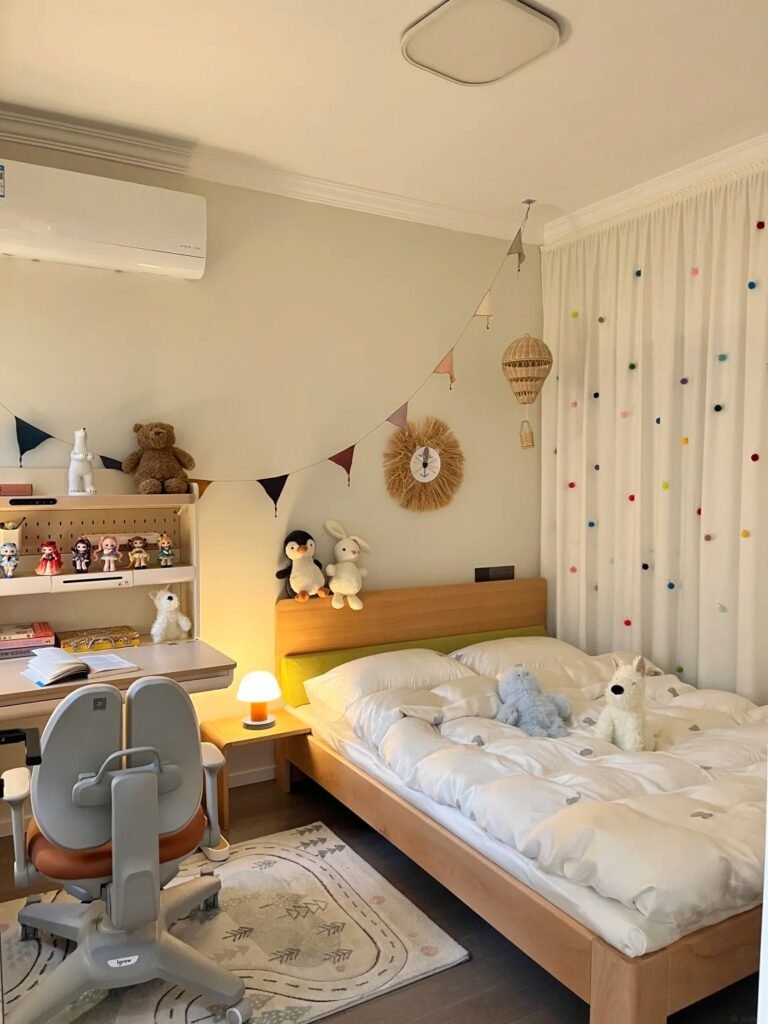
A simple wooden bed and desk can serve as a neutral foundation for more playful decorations.
In this room, the furniture is straightforward, but the accessories add charm: stuffed animals, a fabric garland, a woven lion wall hanging, a hot-air-balloon ornament, and colorful pom-poms on the curtains.
This strategy is useful because accessories are easier and cheaper to change than furniture. It also prevents the room from becoming visually permanent. The decor can evolve over time without requiring a complete makeover.
For a balanced result, keep the larger surfaces neutral and add color through:
- Bedding.
- Toys.
- Wall hangings.
- Curtains.
- Cushions.
- Small lamps.
The result feels playful without overwhelming the limited floor space.
8. Use a Soft Color Theme to Make the Room Feel More Cohesive
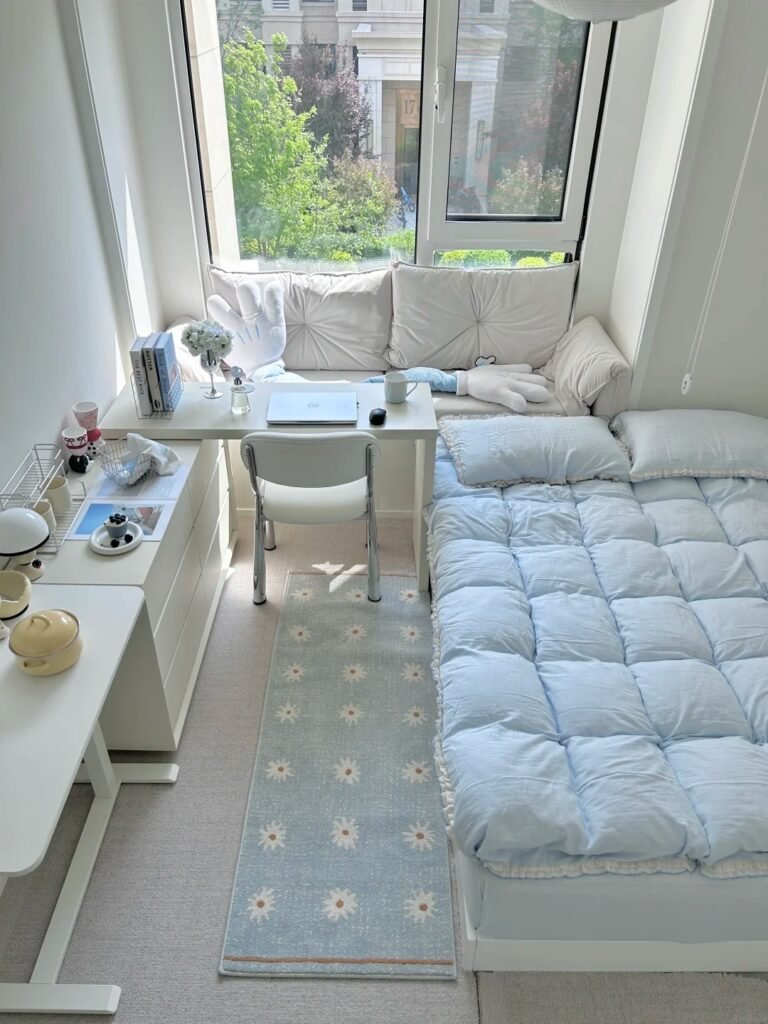
Choosing one main color can make a small room feel calmer and more connected.
This bedroom uses pale blue across the bedding, rug, pillows, and small decorative details. White furniture reflects daylight, while the large window helps the room feel brighter and more open.
A narrow desk is positioned between the bed and window seating area, creating a compact work zone. Because the furniture shares the same white finish, the layout feels less cluttered.
Good small-bedroom color combinations include:
- White and pale blue.
- Cream and soft pink.
- Beige and warm brown.
- White and sage green.
- Light gray and natural wood.
Avoid using too many unrelated colors. A limited palette helps separate objects visually without making the room look busy.
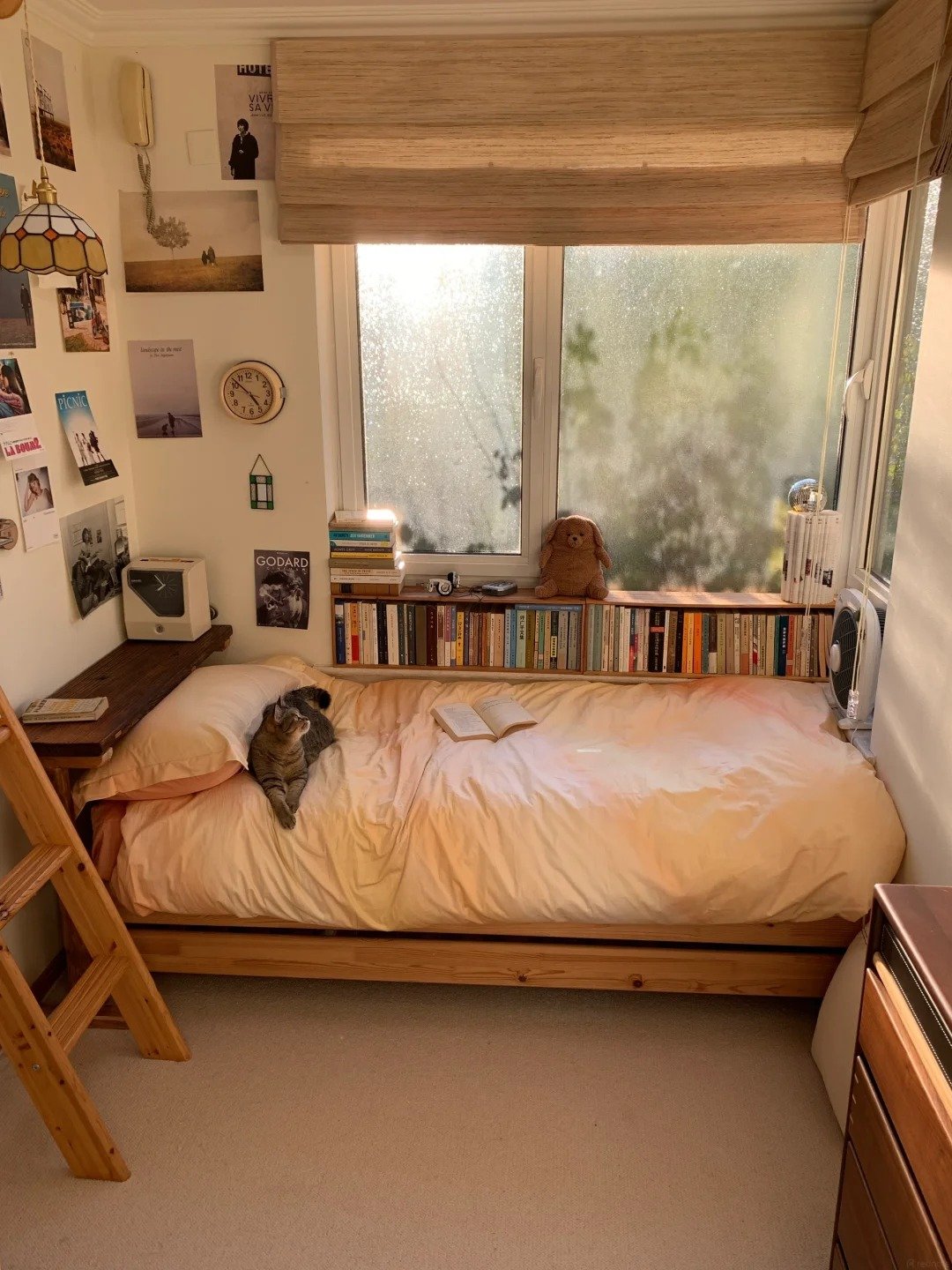
9. Turn the Area Under the Window Into Storage
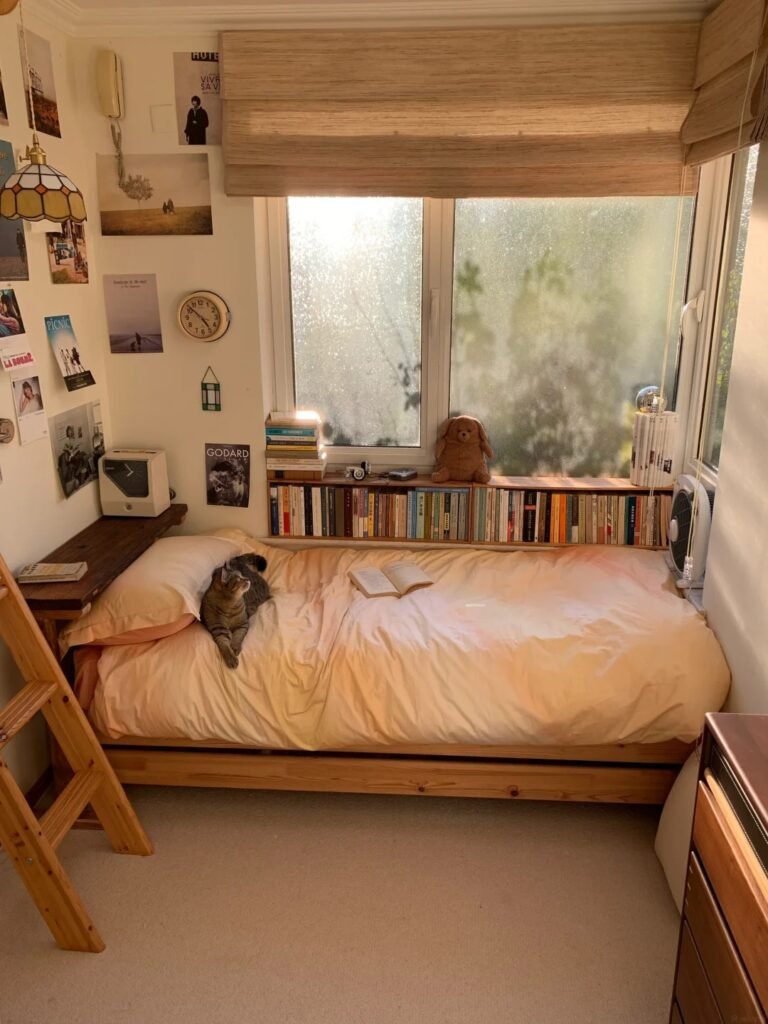
The space beneath a window is often wasted, but it can become one of the most useful parts of a small bedroom.
In this room, a long low bookcase runs beneath the window. It provides storage for a large collection of books while also functioning as a wide windowsill.
The bed sits directly beside the shelf, allowing the books to remain within reach. Warm peach bedding and wooden furniture soften the narrow layout.
This idea is particularly effective when a standard tall bookcase would block light or make the room feel smaller.
A low window shelf can hold:
- Books.
- Baskets.
- Plants.
- Decorative objects.
- Bedside essentials.
Just make sure the shelf does not prevent the window from opening safely.
10. Use Dark Bedding to Create a Cozy Evening Atmosphere
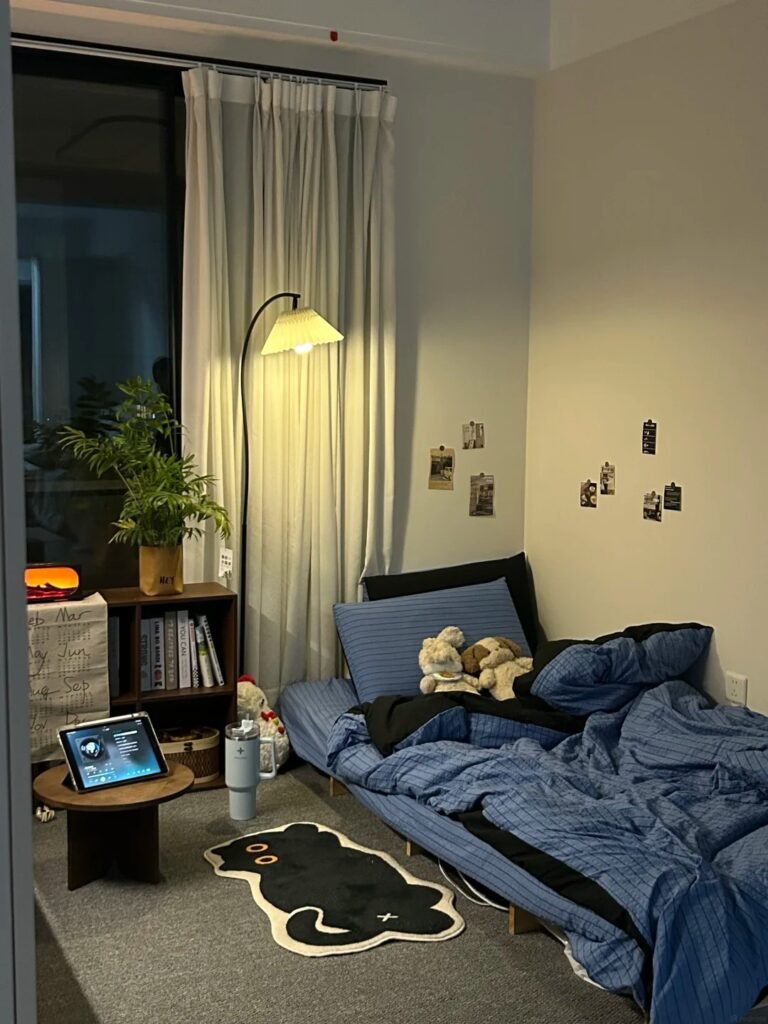
Light colors are often recommended for small bedrooms, but darker shades can also work when used carefully.
This room features deep blue bedding with black accents, creating a restful and slightly dramatic mood. White walls and curtains balance the darker bed, while a warm floor lamp prevents the room from feeling cold.
The low bed frame keeps the furniture visually close to the floor, which can make the ceiling appear higher. A small round table replaces a bulky nightstand, and a compact shelf holds books and plants near the window.
Dark bedding works best when paired with:
- Light walls.
- Soft warm lighting.
- Pale curtains.
- A simple rug.
- Minimal wall decor.
The contrast creates depth and makes the sleeping area feel like a cozy cocoon.
11. Use Wall Collages to Decorate Without Taking Up Floor Space
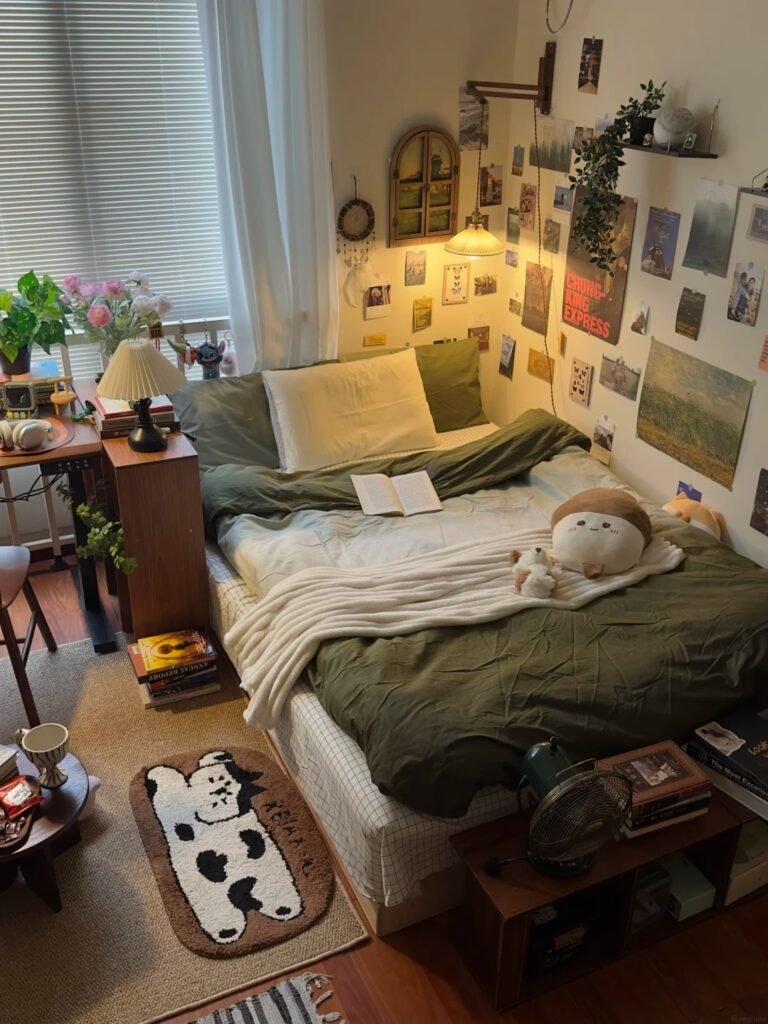
When there is little space for decorative furniture, the walls can carry more of the room’s personality.
This bedroom surrounds the bed with postcards, art prints, photographs, and small posters. The arrangement gives the room a collected, lived-in feeling without using any additional floor space.
The muted green bedding, warm wood furniture, plants, and yellow-toned lighting create a vintage-inspired atmosphere. A narrow shelf at the foot of the bed adds storage for books and a small fan.
To create a wall collage that looks intentional:
- Choose images with related colors.
- Mix a few different sizes.
- Leave small spaces between pieces.
- Concentrate the display around one wall.
- Use removable tape in rental homes.
Avoid covering every wall. One focused gallery area usually looks more polished than scattered decorations throughout the room.
12. Use Vertical Shelving and Rolling Storage Carts
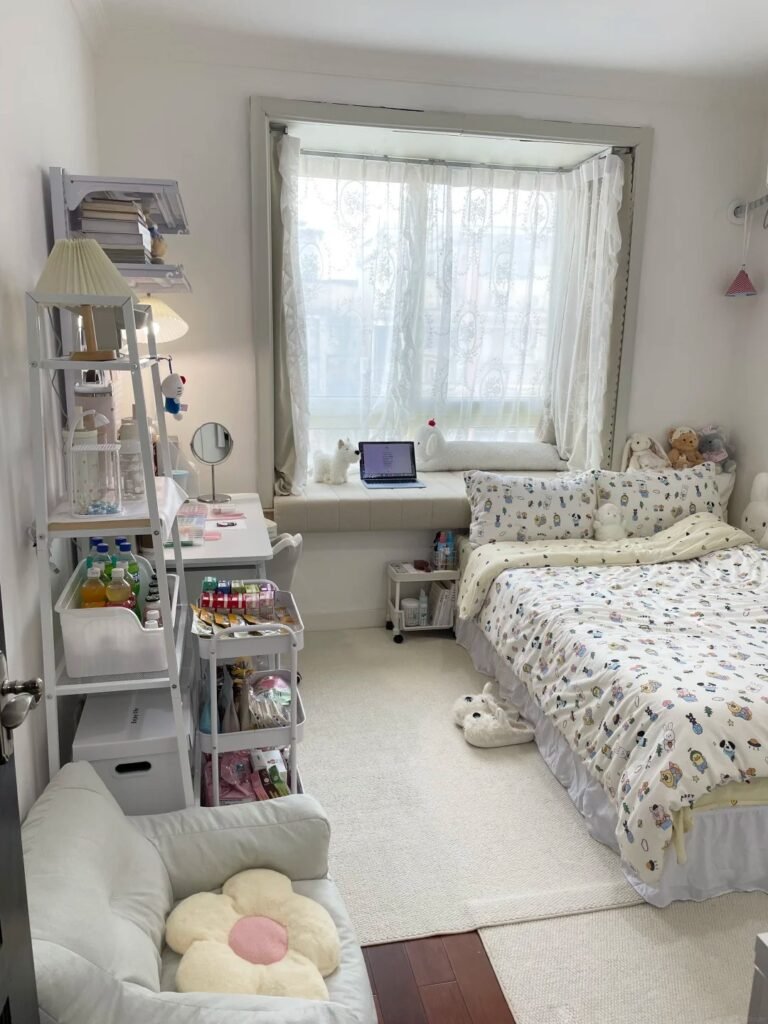
Vertical storage is essential when the floor area is limited.
This bright bedroom uses a tall ladder-style shelf for beauty products, drinks, containers, and everyday essentials. A rolling cart adds flexible storage that can be moved beside the desk, bed, or chair as needed.
The room also makes good use of the window recess by turning it into a padded seat and work area. Soft white furnishings and a light carpet help the room feel clean and spacious.
A rolling cart is particularly practical because it can serve as:
- A bedside unit.
- A snack station.
- A beauty organizer.
- A craft cart.
- A study-supply trolley.
Use matching containers to keep open storage from looking messy.
How to Make a Small Bedroom Look Bigger
Beyond furniture placement, a few simple design choices can visually enlarge a compact room.
Keep the Walkway Clear
The path from the door to the bed should remain as open as possible. Avoid placing small stools, boxes, or baskets in circulation areas.
Choose Furniture With More Than One Purpose
A desk can also serve as a bedside table. A low bookcase can become a window shelf. A bench can provide seating and storage.
Use Curtains to Frame the Window
Hang curtains higher and slightly wider than the window to make the wall appear taller. Lightweight curtains also allow more natural light into the room.
Repeat Materials and Colors
Matching wood tones or repeating one accent color makes the room feel more organized. Too many different finishes can create visual clutter.
Keep Storage Easy to Maintain
The best storage system is one you will actually use. Open shelves are convenient for everyday items, while baskets and drawers are better for objects that look untidy.
Final Thoughts
The most effective bedroom ideas for a small room focus on how the space is used rather than how much furniture can fit inside it. A small bedroom should support your daily routine while still feeling restful and personal.
Start with the essentials: the bed, storage, lighting, and a practical walkway. Then add one or two features that make the room more enjoyable, such as a reading chair, window seat, wall collage, plant shelf, or compact desk.
Small rooms often become the coziest spaces because every object has a purpose. With thoughtful planning, even a narrow bedroom can feel comfortable, stylish, and completely your own.