11 Dreamy Lavender Bedroom Ideas for a Soft, Cozy, and Relaxing Space
Lavender is one of those colors that can instantly make a bedroom feel softer, calmer, and more inviting. It brings a gentle touch of color without making the room look too bold or overwhelming. When paired with creamy white, warm lighting, plush fabrics, and light wood flooring, lavender creates a bedroom that feels both cozy and refreshing.
The bedrooms in this collection use the same basic color palette, yet each space has its own personality. Some focus on practical storage, while others create a playful retreat with flower-shaped pillows, character rugs, and small decorative objects.
What I especially like about these rooms is that lavender is rarely used as the dominant color. Instead, it appears in carefully chosen accents—pillows, blankets, rugs, curtains, artwork, or bedding. This makes the rooms feel coordinated without becoming overly themed.
Here are 11 lavender bedroom ideas you can use to create your own soft and relaxing retreat.
1. Add Lavender Accents to a Creamy White Bedroom
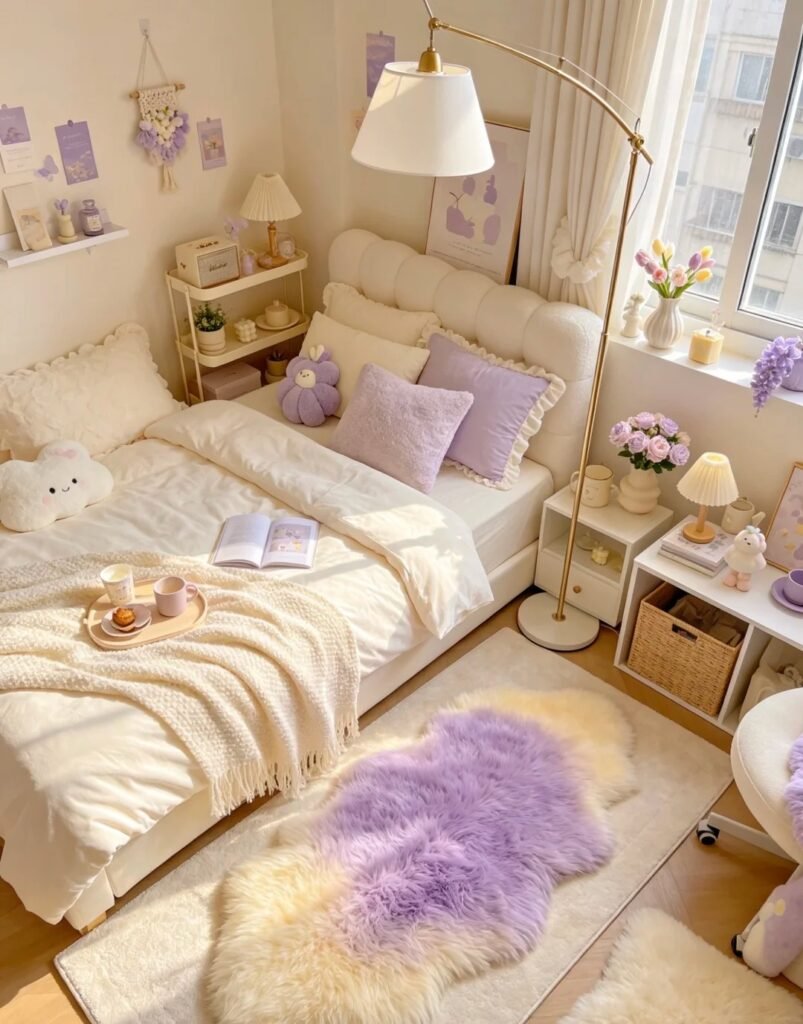
A cream-and-white bedroom provides the perfect background for soft lavender accents. In this room, the white upholstered bed, ivory bedding, pale walls, and fluffy rug keep the overall look bright and peaceful.
Lavender appears through several smaller details, including throw pillows, a flower-shaped cushion, wall prints, and a soft faux-fur rug layered over the larger cream carpet. Because the purple pieces are spread throughout the room, the color feels intentional rather than concentrated in one area.
The tall brass floor lamp adds warmth and elegance while also making good use of vertical space. Small lamps, flowers, candles, and framed prints complete the look without overpowering the bed.
What I love most about this room is how comfortable it feels despite having many decorative objects. The limited color palette keeps everything visually connected.
Try this idea: Start with ivory bedding and introduce lavender through two pillows, one small rug, and a few coordinated prints.
2. Combine a Bedroom, Vanity, and Wardrobe in One Space
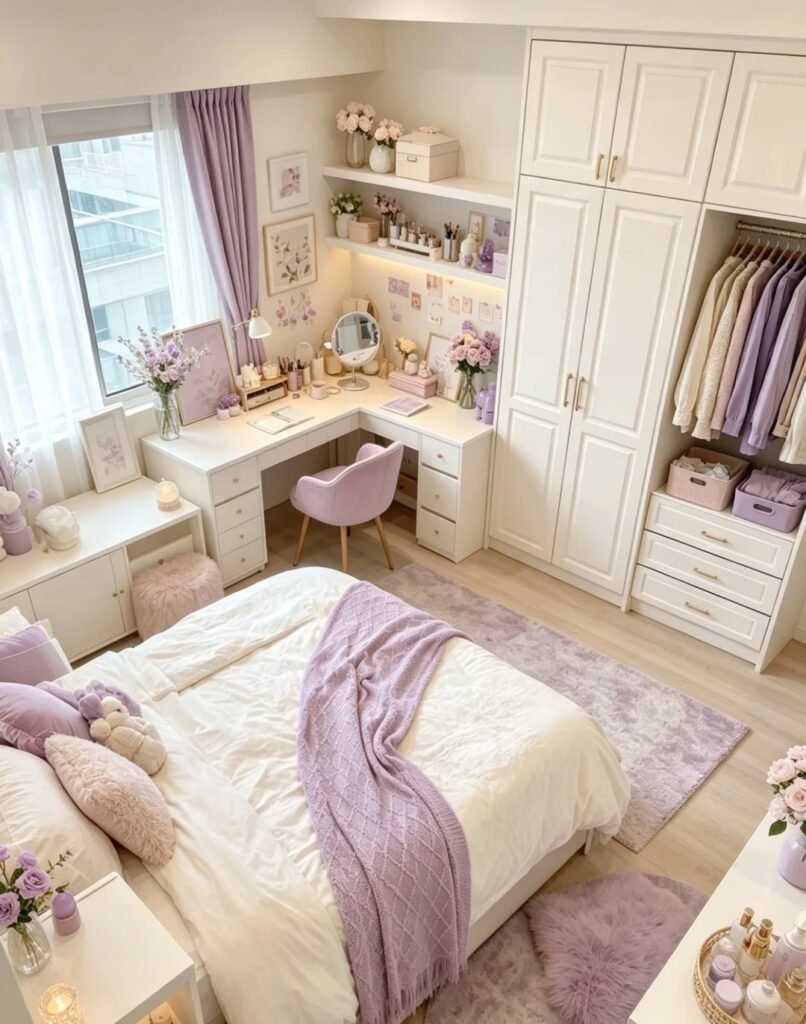
A small or medium-sized bedroom often needs to serve several purposes. This design combines a sleeping area, a corner vanity, storage cabinets, and an open wardrobe without making the room feel cramped.
The L-shaped desk fits neatly into the corner beside the window, taking advantage of natural light. Above the desk, floating shelves provide extra storage for flowers, cosmetics, framed pictures, and decorative boxes.
A large white wardrobe occupies the opposite wall. One section is left open, allowing lavender and white clothing to become part of the room’s color scheme.
The lavender chair, curtains, flowers, rug, and bed accessories soften the built-in white furniture. Gold handles introduce a subtle polished detail.
I particularly like the way this room uses furniture to create order. Even though the space contains many items, almost everything has a designated place.
Try this idea: Use matching cabinets, drawers, and shelving to make a multifunctional bedroom feel more cohesive.
3. Keep the Room Minimal with One Lavender Statement Rug
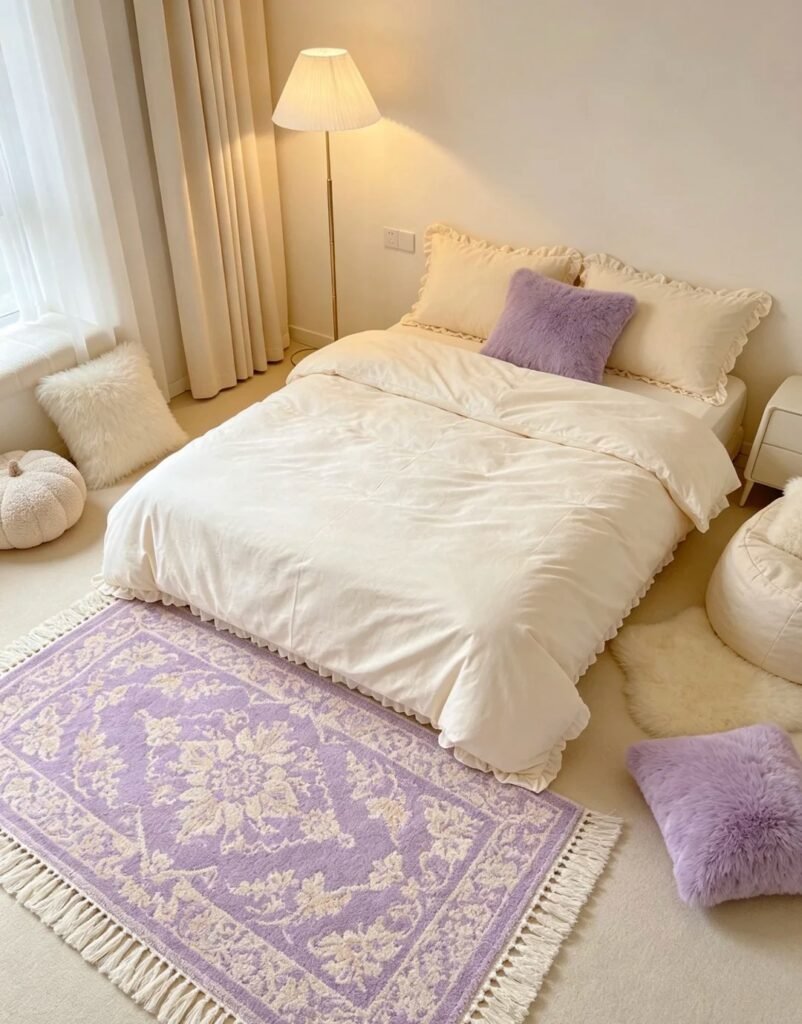
You do not need many accessories to create a beautiful lavender bedroom. This room proves that a simple design can still feel warm and thoughtfully styled.
The bed is dressed almost entirely in cream, with ruffled pillowcases and clean white bedding. A single lavender faux-fur pillow adds softness near the headboard, while another matching cushion rests casually on the floor.
The main feature is the lavender floral rug positioned at the foot of the bed. Its traditional pattern gives the minimalist room more character without introducing visual clutter.
A tall floor lamp in the corner provides warm ambient lighting. The plain walls and uncluttered surfaces allow the textures of the bedding, rug, and cushions to stand out.
This is one of my favorite approaches for anyone who likes lavender but does not want a highly decorated bedroom.
Try this idea: Choose one larger lavender feature—such as a rug, upholstered chair, or blanket—and keep the rest of the room neutral.
4. Build Storage Around a Compact Vanity Area
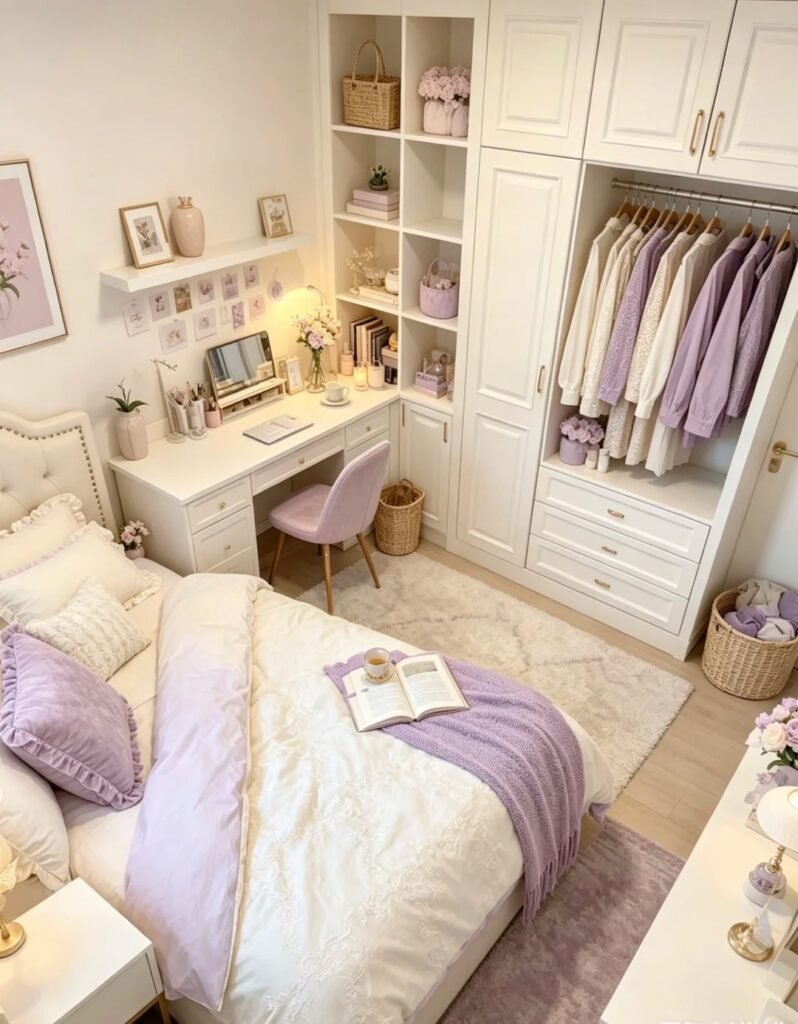
Built-in storage is especially helpful in smaller bedrooms, but it can sometimes make a room feel heavy. This design avoids that problem by using white cabinetry and leaving selected sections open.
The vanity is placed between the bed and the wardrobe. Open cubbies above and beside the desk provide room for books, baskets, cosmetics, artwork, and small decorative pieces.
The open clothing rail visually breaks up the larger cabinet wall. White and lavender clothing reinforces the room’s soft color palette, while woven baskets introduce a natural texture.
Lavender bedding and a folded throw connect the vanity and wardrobe area with the bed. Warm under-shelf lighting creates a welcoming glow around the desk.
What works especially well here is the balance between hidden and visible storage. Everyday clutter can be placed inside drawers and cabinets, while attractive items remain on display.
Try this idea: Combine closed cupboards with a few open shelves so your storage wall feels practical rather than bulky.
5. Create a Cozy Reading Corner Beside the Bed
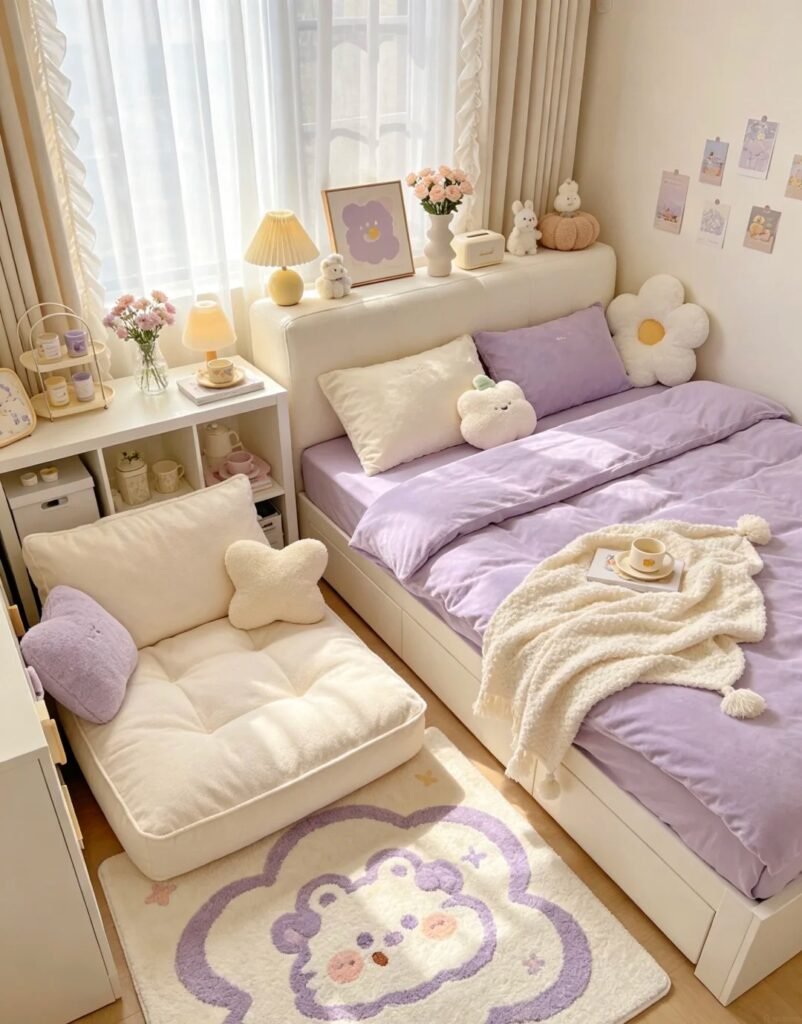
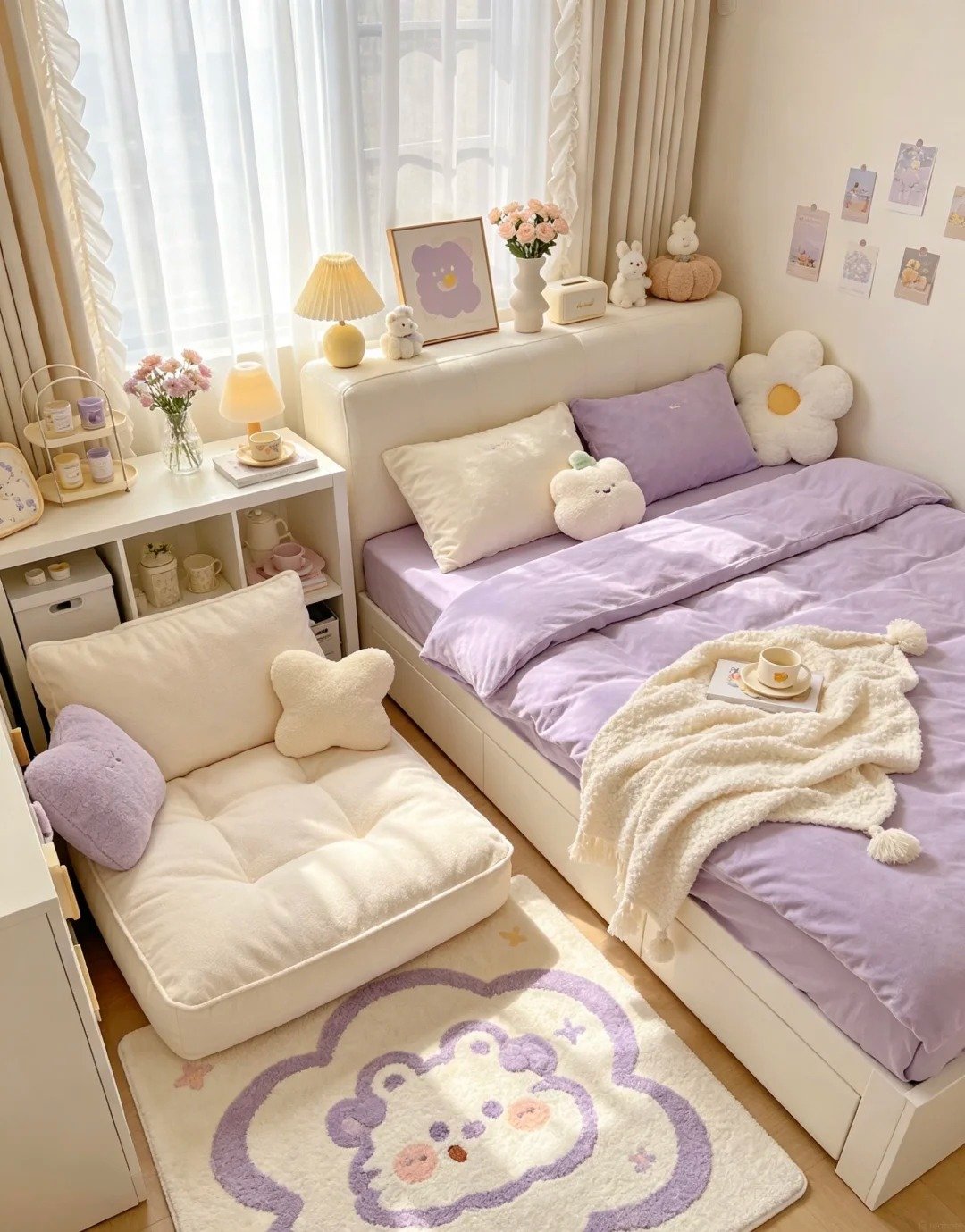
A bedroom can feel much more personal when it includes a place to sit that is separate from the bed. In this room, a low cream floor chair creates a small reading and relaxation corner beside the window.
The lavender bedding immediately becomes the room’s focal point. White pillows and a chunky cream throw prevent the bed from looking too dark or overly purple.
Small table lamps, pastel flowers, framed artwork, plush toys, and decorative candles make the space feel playful and lived-in. The character rug introduces another layer of lavender while giving the narrow walkway a softer surface.
The large window is also used thoughtfully. Decorative objects are arranged along the headboard and nearby ledge without blocking too much natural light.
I like how this room feels youthful without looking messy. The repeated use of rounded shapes—from the chair and lamps to the cushions and flowers—creates a gentle, welcoming atmosphere.
Try this idea: Add a compact floor chair or cushioned reading seat to an unused corner near a window.
6. Use Playful Rugs to Divide a Larger Bedroom
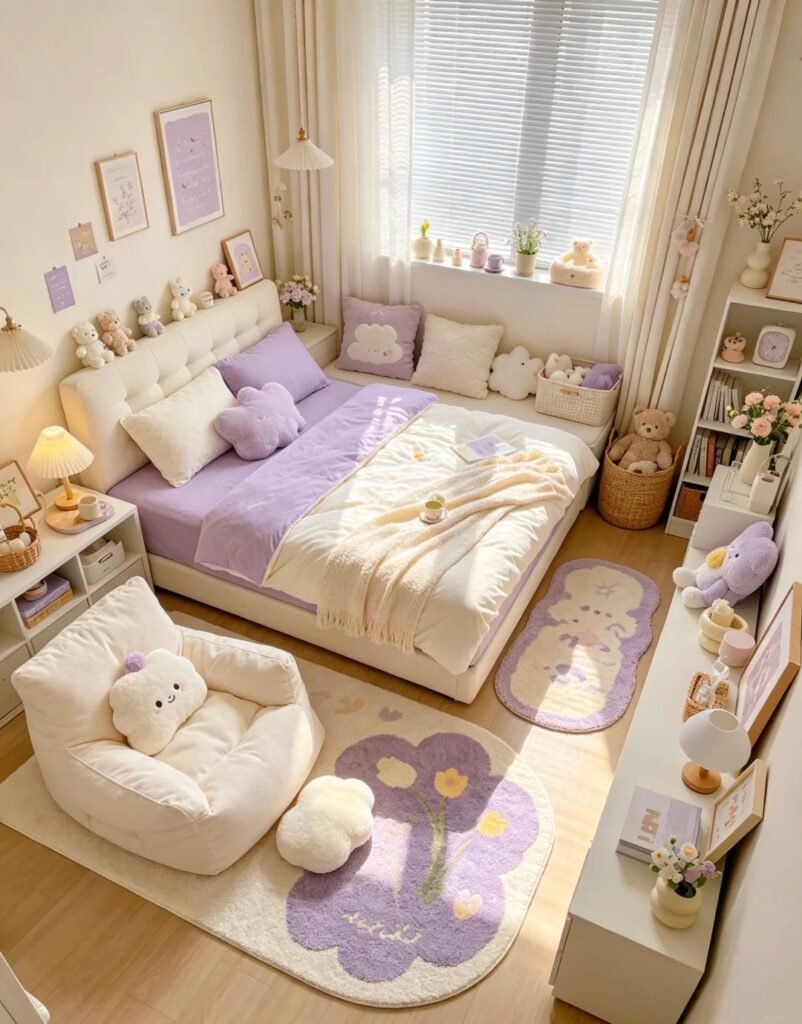
This room uses several rugs to define different areas while maintaining one consistent design style. A large neutral rug anchors the bed and lounge chair, while smaller lavender rugs decorate the walkway and the space near the cabinets.
The bed combines lavender sheets with white bedding and a cream throw. Flower-shaped and cloud-shaped pillows continue the soft, playful theme.
A plush cream chair creates an informal seating area at the foot of the bed. The surrounding bookcase, dresser, baskets, and window ledge provide storage without making the room feel overly formal.
The strongest feature is the mix of rug shapes. Rather than using only one large rectangular rug, the room includes floral and character-inspired designs that make the floor part of the decor.
What I find most appealing here is the sense of comfort. Nearly every surface looks soft, from the upholstered furniture to the rugs and cushions.
Try this idea: Use one large neutral rug as a base, then add one or two smaller lavender rugs to define specific zones.
7. Style the Bed with Ruffled Bedding and Lavender Layers
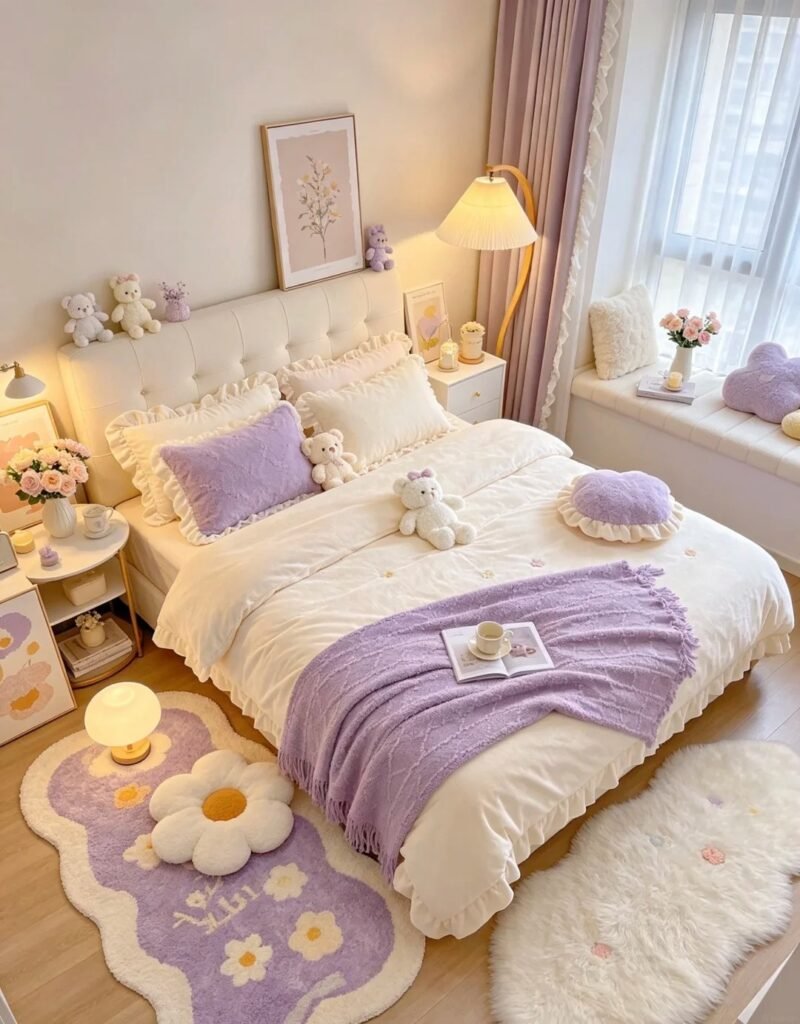
Ruffled edges can transform plain white bedding into something softer and more romantic. In this room, the ruffled duvet and pillowcases create a delicate foundation for lavender accessories.
Two lavender faux-fur pillows, a round cushion, and a knitted throw add different textures without introducing too many colors. Small teddy bears placed on the bed and headboard make the arrangement feel charming and relaxed.
The room also benefits from several lighting sources. A floor lamp, bedside lamps, and a small globe lamp create layers of warm illumination. This is much cozier than relying on one bright ceiling light.
The lavender curtains and floral rugs bring the color beyond the bed, helping the entire room feel coordinated.
I especially like the mix of polished and playful details. The upholstered headboard and framed botanical print feel elegant, while the plush toys and flower cushions keep the space approachable.
Try this idea: Mix smooth bedding, faux fur, knit fabric, and ruffled edges to create a layered bed using only two main colors.
8. Turn a Small Bedroom into a Work-and-Movie Retreat
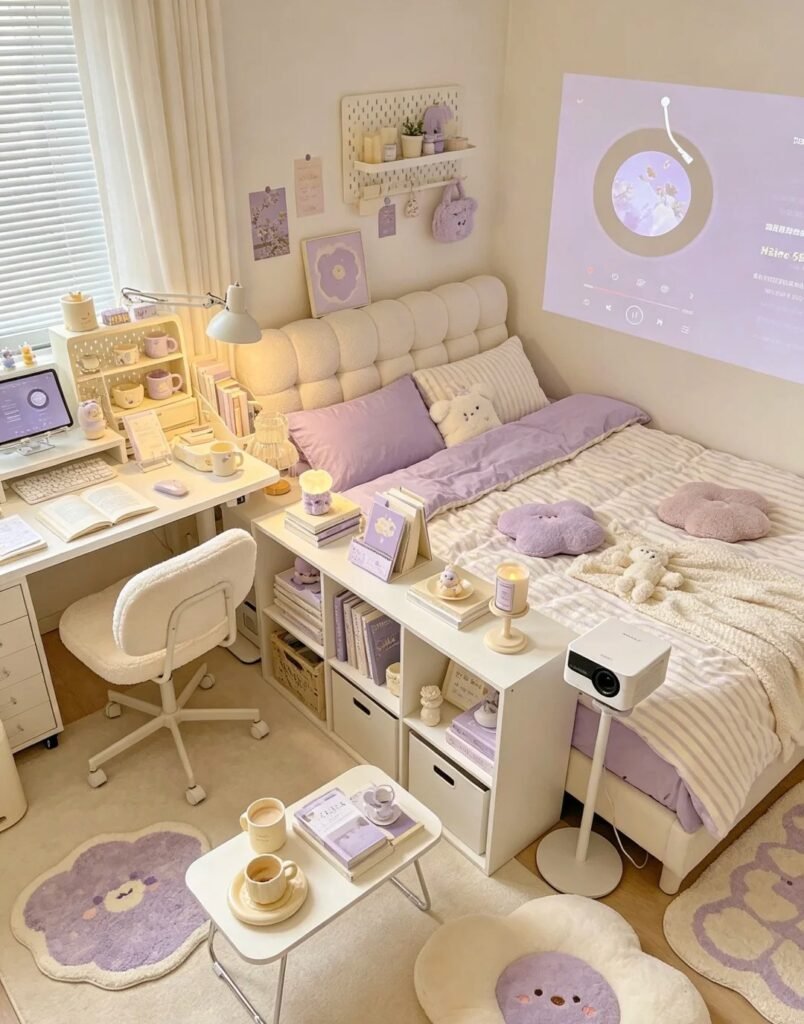
For anyone who uses a bedroom for sleeping, studying, and entertainment, this setup offers plenty of inspiration.
The bed sits beside a compact desk equipped with a computer, task lighting, books, and desktop organizers. A low open bookcase separates the bed slightly from the rest of the room while providing additional storage.
A small projector points toward the blank wall above the bed, turning the bedroom into a private movie space without requiring a television cabinet.
Lavender bedding, mugs, books, cushions, candles, and rugs tie the functional pieces into the room’s aesthetic. The white furniture keeps the arrangement from feeling visually crowded.
This is a clever example of making a small space work harder. The room includes a workspace, storage, sleeping area, and entertainment setup, yet everything remains within easy reach.
Try this idea: Place a low shelf beside the bed to store books and accessories while subtly separating the sleeping and working areas.
9. Design an L-Shaped Workspace Beside the Bed
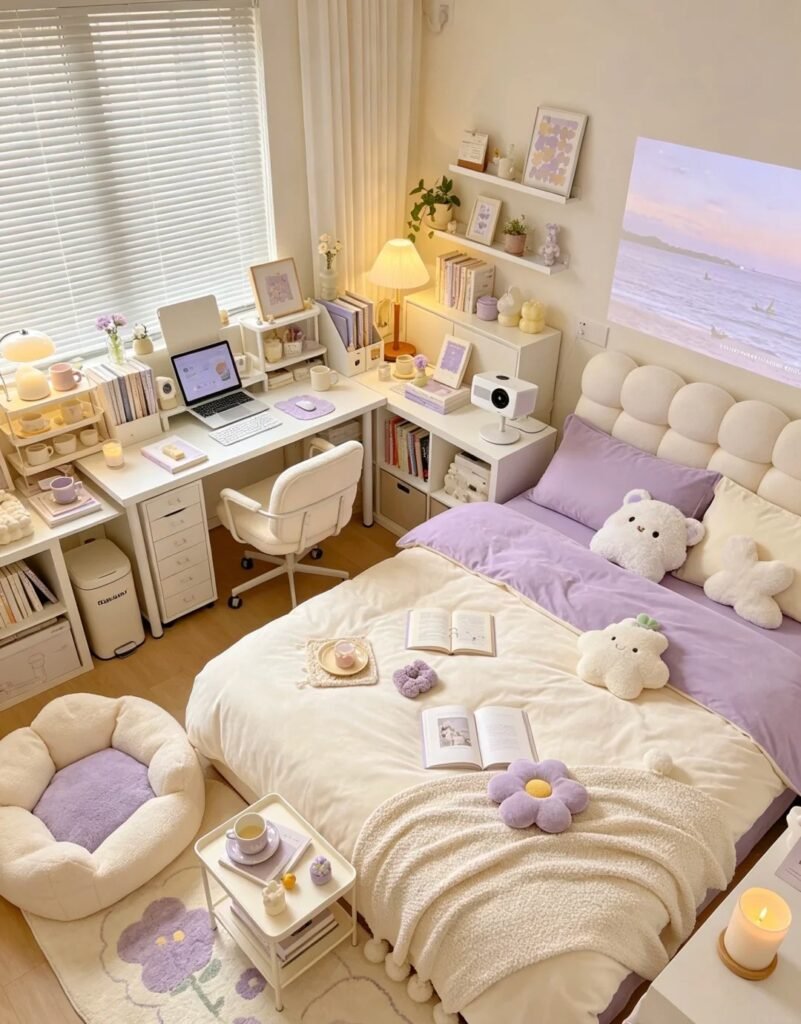
An L-shaped desk can maximize an awkward corner and create a surprisingly spacious workspace. In this bedroom, the desk extends beneath the window and continues along the wall beside the bed.
The setup includes a laptop, keyboard, books, lamps, organizers, flowers, and display shelves. White furniture reflects daylight from the window, while warm lamps make the area feel comfortable in the evening.
The bed uses lavender pillowcases beneath a creamy duvet. Flower-shaped cushions and a thick textured throw add softness and make the room feel more inviting.
A projector displays calming scenery on the wall, creating a relaxing atmosphere that complements the pastel color scheme.
What stands out to me is the consistency of the accessories. Even practical objects such as notebooks, mugs, mouse pads, and storage boxes follow the white-and-lavender palette.
Try this idea: Coordinate small desk accessories with your bedding rather than buying larger pieces of colored furniture.
10. Add a Window Seat for a Brighter, More Relaxing Bedroom
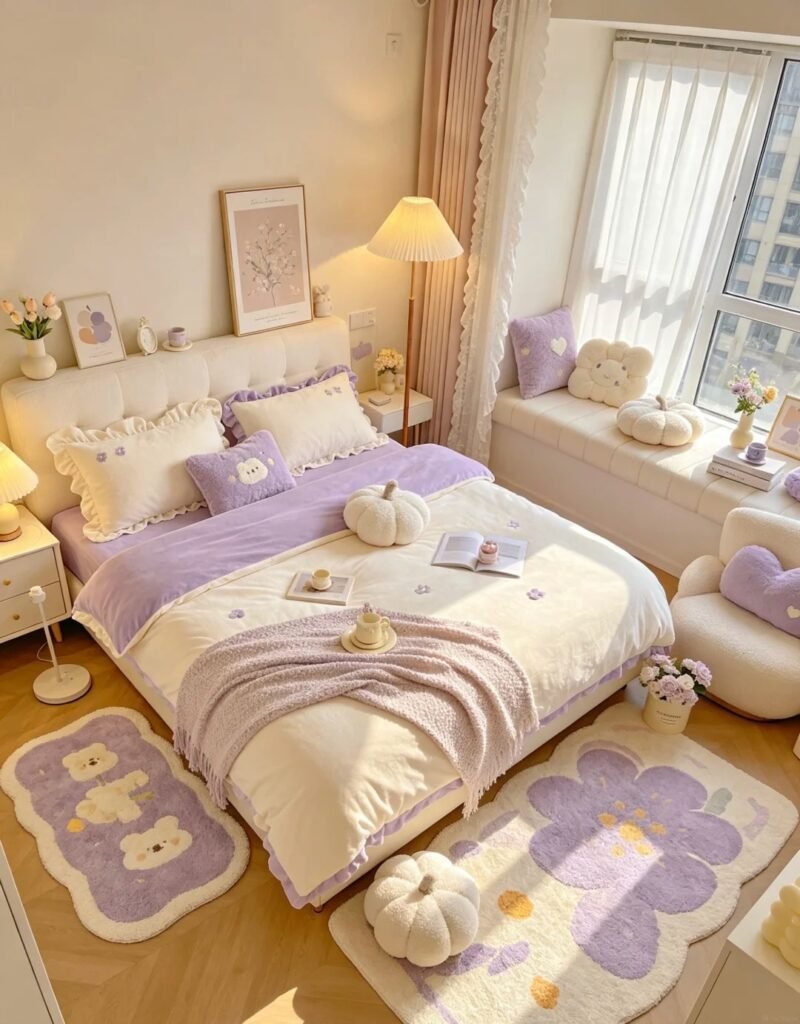
A window seat can make a bedroom feel more spacious and luxurious, even when the overall layout is fairly simple.
In this room, the built-in bench extends beneath the large window. Cream upholstery helps it blend with the bed, while lavender and white cushions turn it into a comfortable reading spot.
The bed is layered with lavender sheets, ivory bedding, ruffled pillows, and a soft mauve throw. Flower-patterned rugs on both sides introduce visual interest without covering the entire wooden floor.
Floor lamps placed near the bed and window add height and balance. Small vases of lavender and pink flowers repeat the room’s pastel colors.
The window seat is my favorite part of this design because it creates another reason to spend time in the room. It is not only a sleeping space but also a place to read, drink tea, or enjoy the sunlight.
Try this idea: Place a cushioned bench under a window and add two or three pillows in colors taken from your bedding.
11. Create a Cute Lavender Bedroom with Character Decor
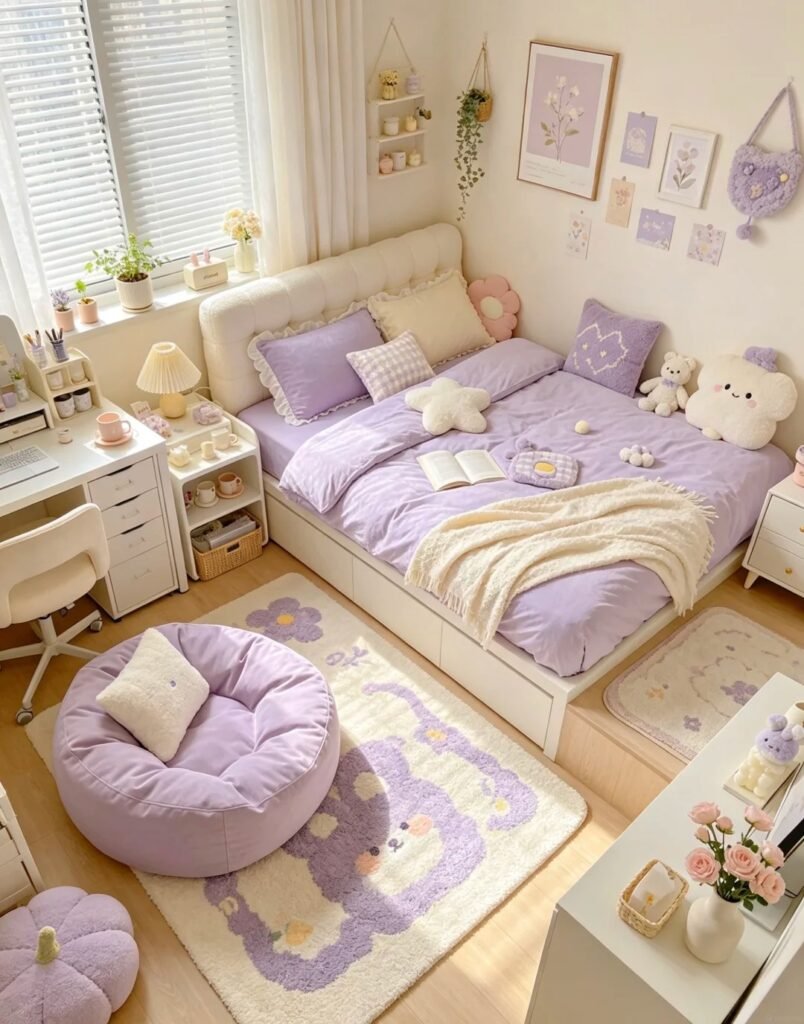
The final bedroom embraces lavender more boldly. The bed is dressed almost entirely in soft purple, while white pillows and a cream throw provide contrast.
A lavender beanbag creates a casual lounge area, and a large character rug adds personality to the center of the room. Smaller flower and cloud-shaped cushions appear on the bed, walls, and furniture.
The desk sits near the window, making it suitable for studying or working during the day. Hanging shelves, small plants, framed floral art, and pastel postcards decorate the walls without taking up floor space.
Despite the number of cute accessories, the room still feels organized because most of the furniture is white. The lavender pieces are distributed evenly rather than grouped in one corner.
This room is a strong choice for anyone who wants a cheerful, expressive bedroom rather than a strictly minimalist one.
Try this idea: Select one recurring motif—such as flowers, clouds, bears, or stars—and repeat it through rugs, pillows, and wall decor.
How to Create a Balanced Lavender Bedroom
The most successful lavender bedrooms usually begin with a neutral foundation. White, ivory, cream, beige, and light wood allow lavender accents to stand out while keeping the room bright.
A simple color balance to follow is:
- 60% neutral base: walls, large furniture, curtains, and main bedding
- 30% lavender: sheets, blankets, rugs, chairs, or curtains
- 10% supporting accents: pink flowers, gold lighting, greenery, or natural baskets
Texture is just as important as color. Use a combination of cotton bedding, knitted throws, faux-fur pillows, upholstered furniture, woven baskets, and soft rugs. These details prevent a pale room from feeling flat.
Lighting also has a major effect on the finished space. Warm bedside lamps and floor lamps make lavender appear softer, while cool white lighting can make the color look slightly gray or blue.
Final Thoughts
A lavender bedroom does not need purple walls or an entirely matching furniture set. In many of these rooms, the strongest designs use lavender only in carefully selected details.
Start with a light neutral base, then add color gradually through bedding, pillows, rugs, curtains, artwork, and flowers. Keep practical storage in mind, especially when combining the bedroom with a vanity, workspace, reading corner, or entertainment area.
The goal is not to fill every surface with decorations. It is to create a bedroom that feels comfortable, personal, and calming. Whether you prefer a clean minimalist space or a playful room filled with soft character decor, lavender can bring warmth and charm without making the room feel overwhelming.